
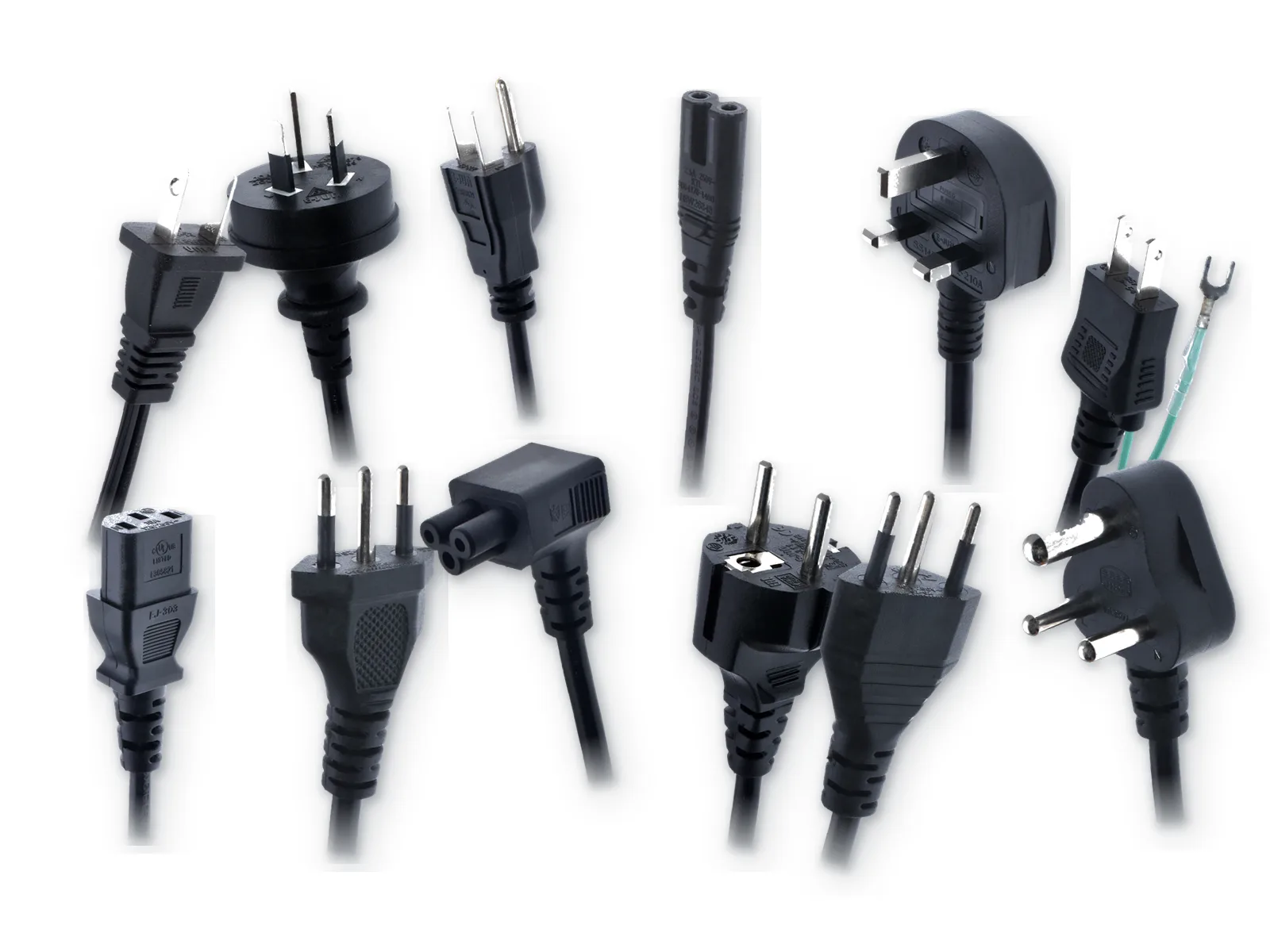
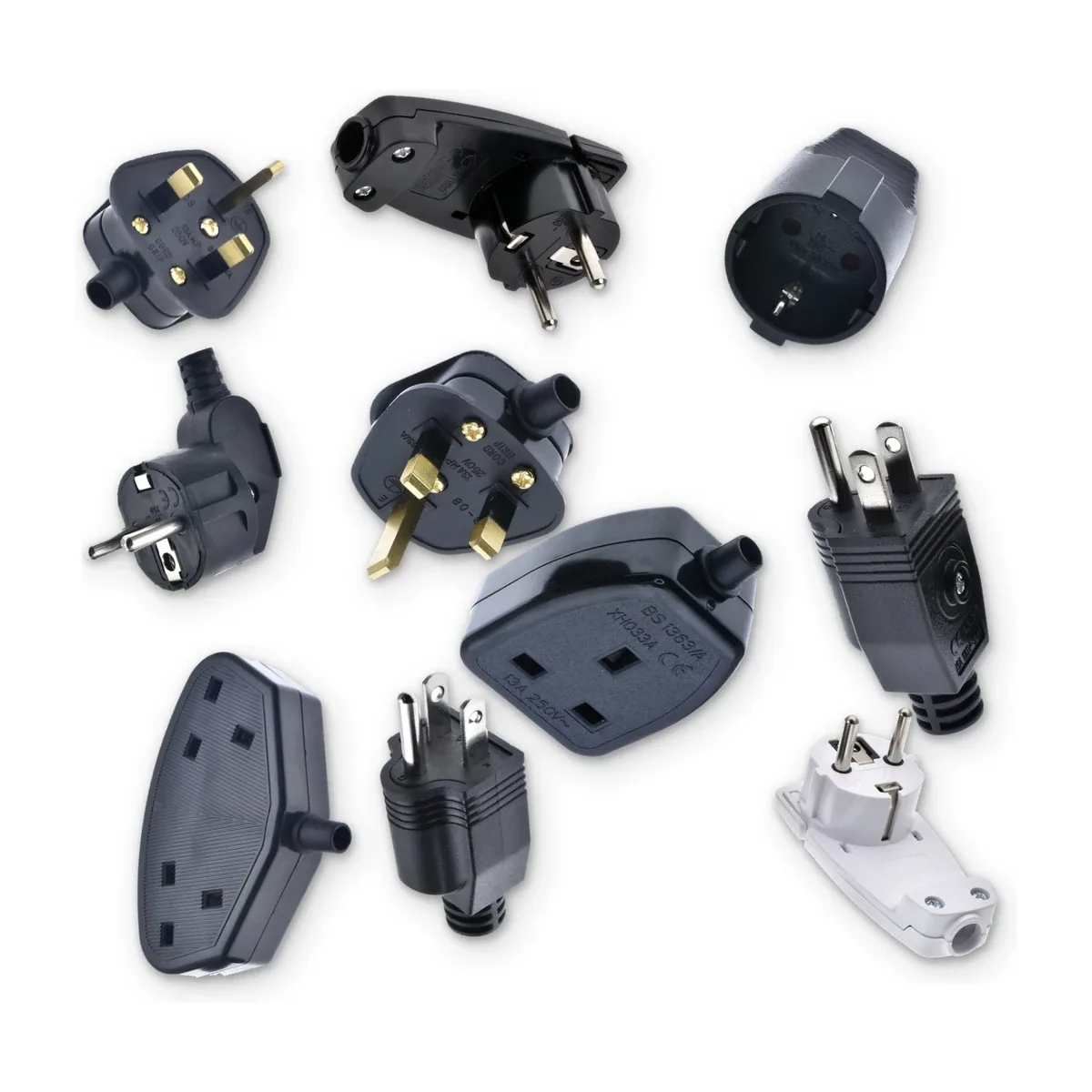
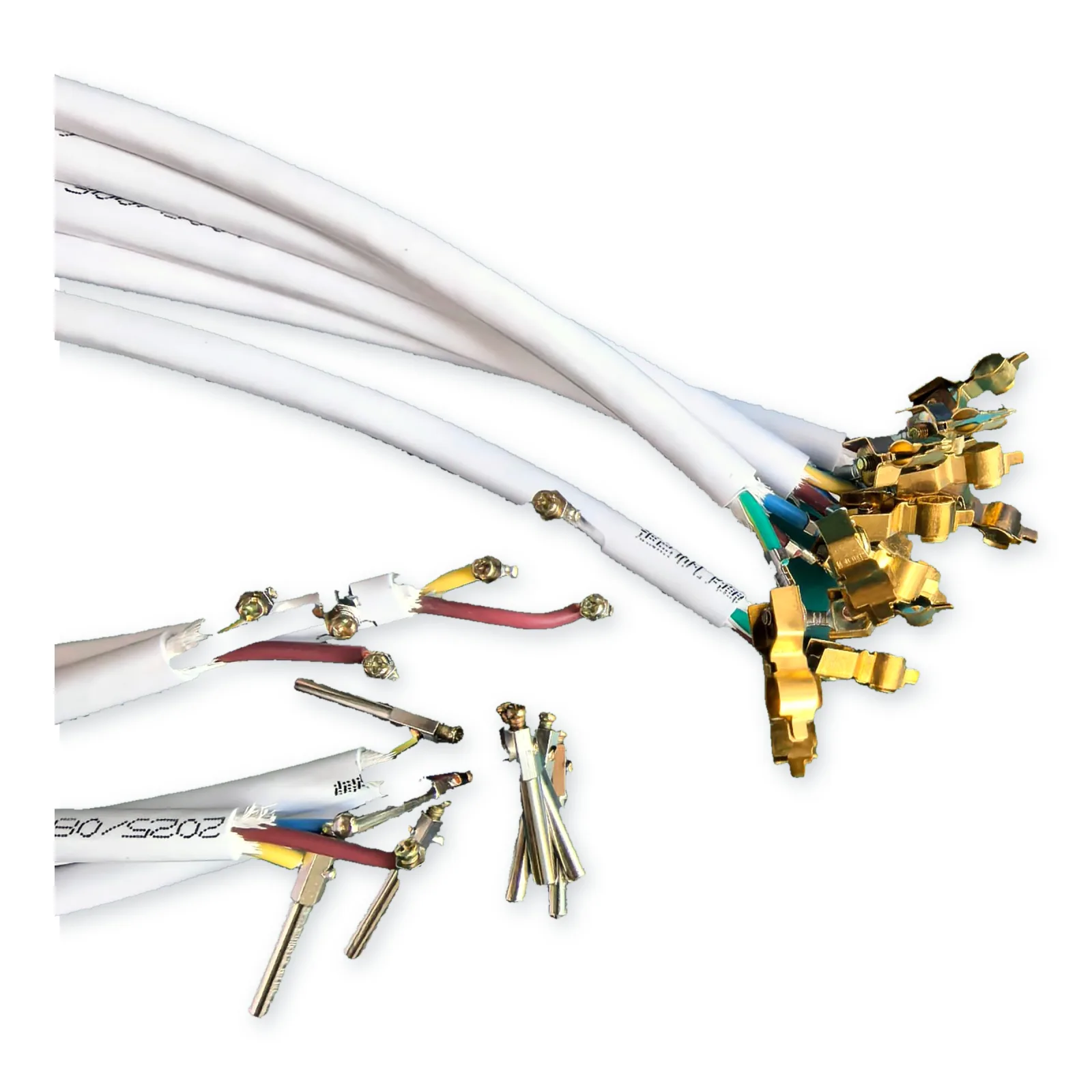
The most common line in a cord enquiry is "just send me a European cord". Europe alone keeps a dozen flexible-cord types in use, and 300/300 V is a different product from 300/500 V. Move to North America and the naming changes to another alphabet entirely. Here is the working set, market by market, before the next quotation.
Europe: the HAR system, where three digits set the voltage
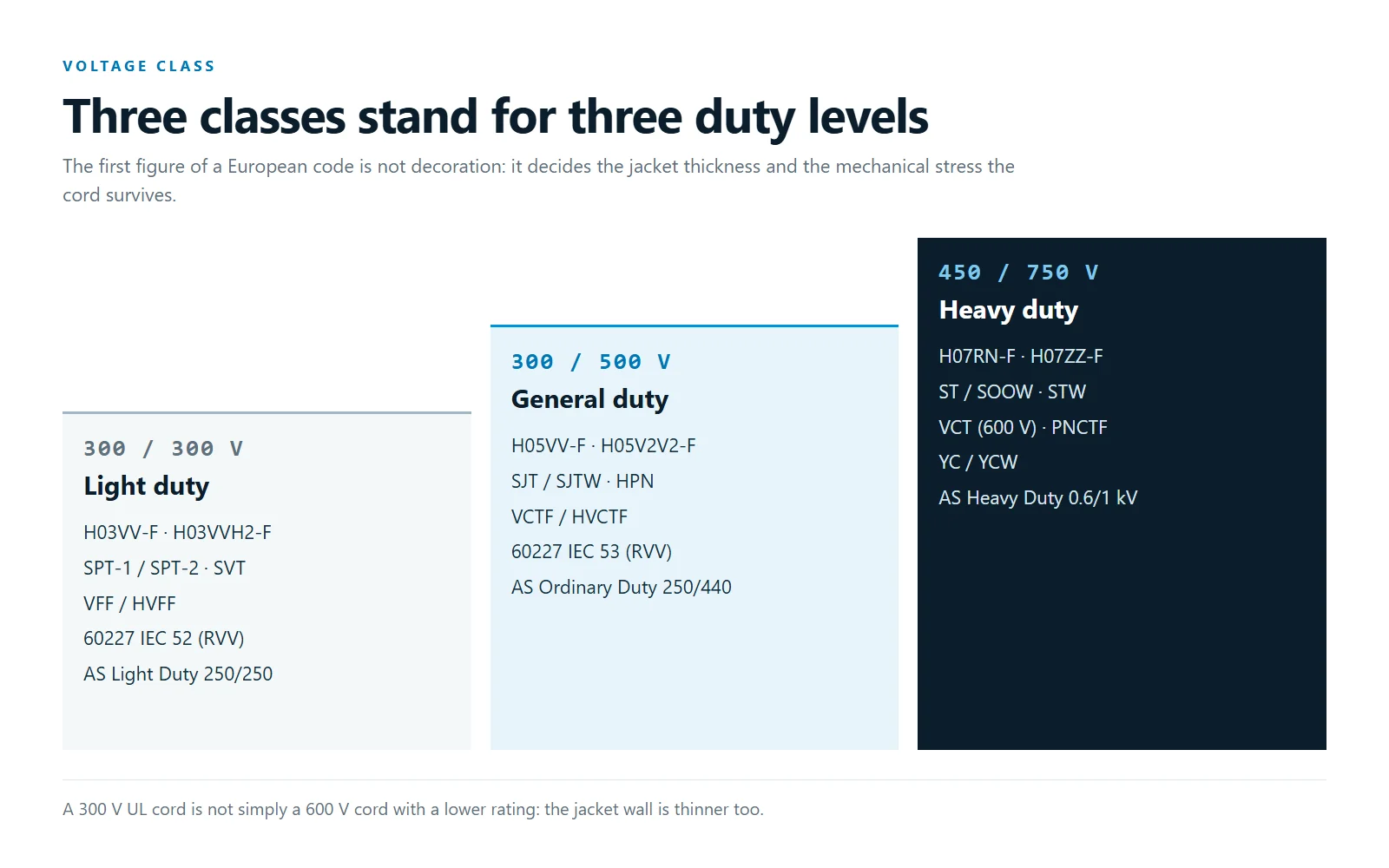
The first figure of a European code is the voltage class: 03 = 300/300 V, 05 = 300/500 V, 07 = 450/750 V. The two letters after it name the insulation and the jacket, V being PVC.
- H03VV-F / H03VVH2-F: 300/300 V, 2-3 cores 0.5-0.75 mm², luminaires, chargers, small appliances (H2 = flat)
- H05VV-F: 300/500 V, 2-5 cores 0.75-2.5 mm², the workhorse for appliances and IT equipment
- H05V2V2-F: heat-resistant PVC to 90 °C, kettles, heaters, irons
- H05VV5-F: oil-resistant jacket, machine tools, assembly lines, car washes, not for outdoor use
- H07RN-F: 450/750 V heavy rubber, sites, construction machinery, outdoor mobile equipment
- H07ZZ-F: low smoke zero halogen, hospitals, schools, shopping centres
North America: UL 62 grades by construction, not by voltage
UL 62 does not start with a voltage. It splits into S / SJ / SV first, then uses suffixes to describe jacket material and environment.
- SPT-1 / -2 / -3: parallel cord, insulation 0.030″ / 0.045″ / 0.060″, thicker as the number rises
- SVT: 300 V light duty, vacuum cleaners and small appliances; SJT: 300 V general duty, the highest-volume type
- ST: 600 V; SOOW: 600 V heavy rubber, welders, mining, outdoor heavy industry
- Suffix O = oil-resistant jacket, OO = insulation and jacket both, W = weather and water, E = TPE elastomer
- HPN / HSJ: heat-resistant parallel and heat-resistant flexible cords for heating appliances
Japan: the letters name parts, not voltage
- VFF / HVFF: PVC parallel cord, 2 cores 0.5-2.0 mm²
- VCTF / HVCTF: round jacketed cord, the type most Japanese appliances ship with
- VCTFK: oval jacket for narrow gaps and wall runs
- VCT: 600 V heavy duty, power tools and industrial equipment
- PNCTF: neoprene jacket, outdoor, wet and oily locations
In JIS the H prefix means heat-resistant (75 °C). It has nothing to do with the European "harmonised".
China: CCC uses the IEC numbers directly
- 60227 IEC 52 (RVV) = H03VV-F, 60227 IEC 53 (RVV) = H05VV-F
- 60227 IEC 57 (RVV-90) = H05V2V2-F, 60227 IEC 74 (RVVYP) adds oil resistance and a screen
- 60245 IEC 53 (YZ / YZW) = H05RR-F / H05RN-F, 60245 IEC 66 (YC / YCW) = H07RN-F
Similar figures do not make them interchangeable. CCC-RVV is legal at home; an EU shipment still needs cable held under HAR / VDE approval.
Australia, Korea, India, Brazil, Argentina: five different logics
- AS/NZS 3191 names cords by mechanical class LD / OD / HD plus a material code such as V-90 or 5V-90; no H codes
- Korea KC adopts IEC / HAR types directly, and certificates often read 60227 IEC 53
- India IS 694 rates at 1100 V AC with its own core colour code, so it cannot be dropped in
- Brazil works with NM 42-C5 parallel cord and Cabo PP round cord; plug approvals accept IEC types explicitly
- Argentina IRAM 2158 / 2188 puts live and neutral the other way round compared with AS/NZS, so wiring must be confirmed
One line to remember: a certificate is not a model
VDE, UL, PSE, CCC, SAA and INMETRO are approvals. H05VV-F, SJT and VCTF are the models. When a buyer asks for "a UL cord", the four things worth confirming are the model, the AWG, the temperature rating and the end use.