
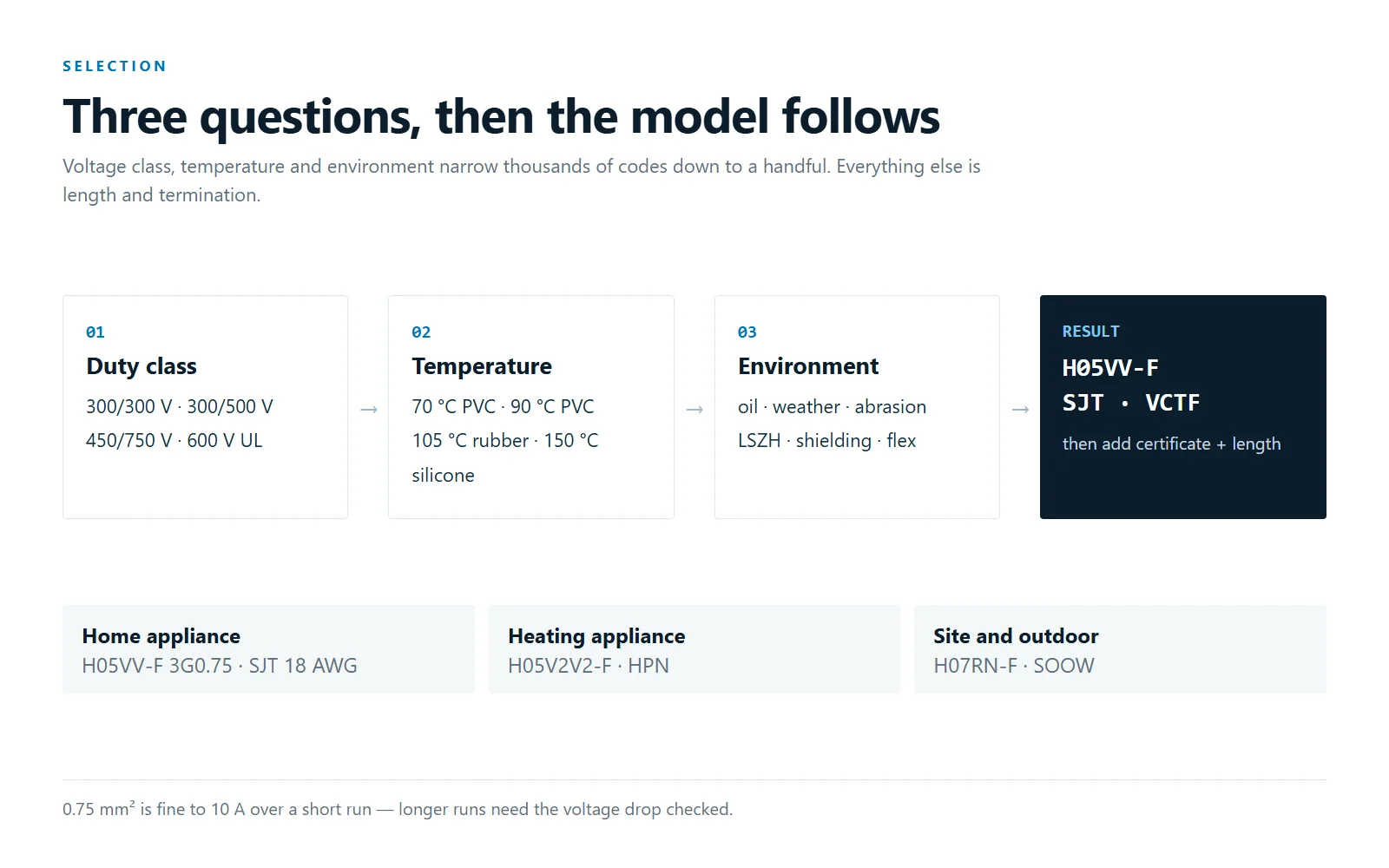
Cord selection really has only three variables: voltage and mechanical class, temperature, and environment. Settle those and the model is usually unique. The six scenarios below can be matched directly; the six mistakes after them are where quotations most often diverge.
Six scenarios, matched directly
- Indoor appliances, computers, monitors: H05VV-F 3G0.75 / 1.0 in Europe, SJT 18 / 16 AWG in North America, VCTF 3×0.75 in Japan
- Heating appliances (kettles, heaters, irons): H05V2V2-F / RVV-90 / HPN / HVCTF
- Outdoor, site, wet: H07RN-F / SOOW / YCW / PNCTF / AS Heavy Duty
- Crowded buildings (hospitals, schools, malls): LSZH types such as H07ZZ-F / H05Z1Z1-F
- Oil, machine tools, car washes: H05VV5-F / SJTOW / RVVYP
- Interference or screening: RVVYP or a screened HAR cord, with the shield ground decided by the EMC design of the unit
Six mistakes
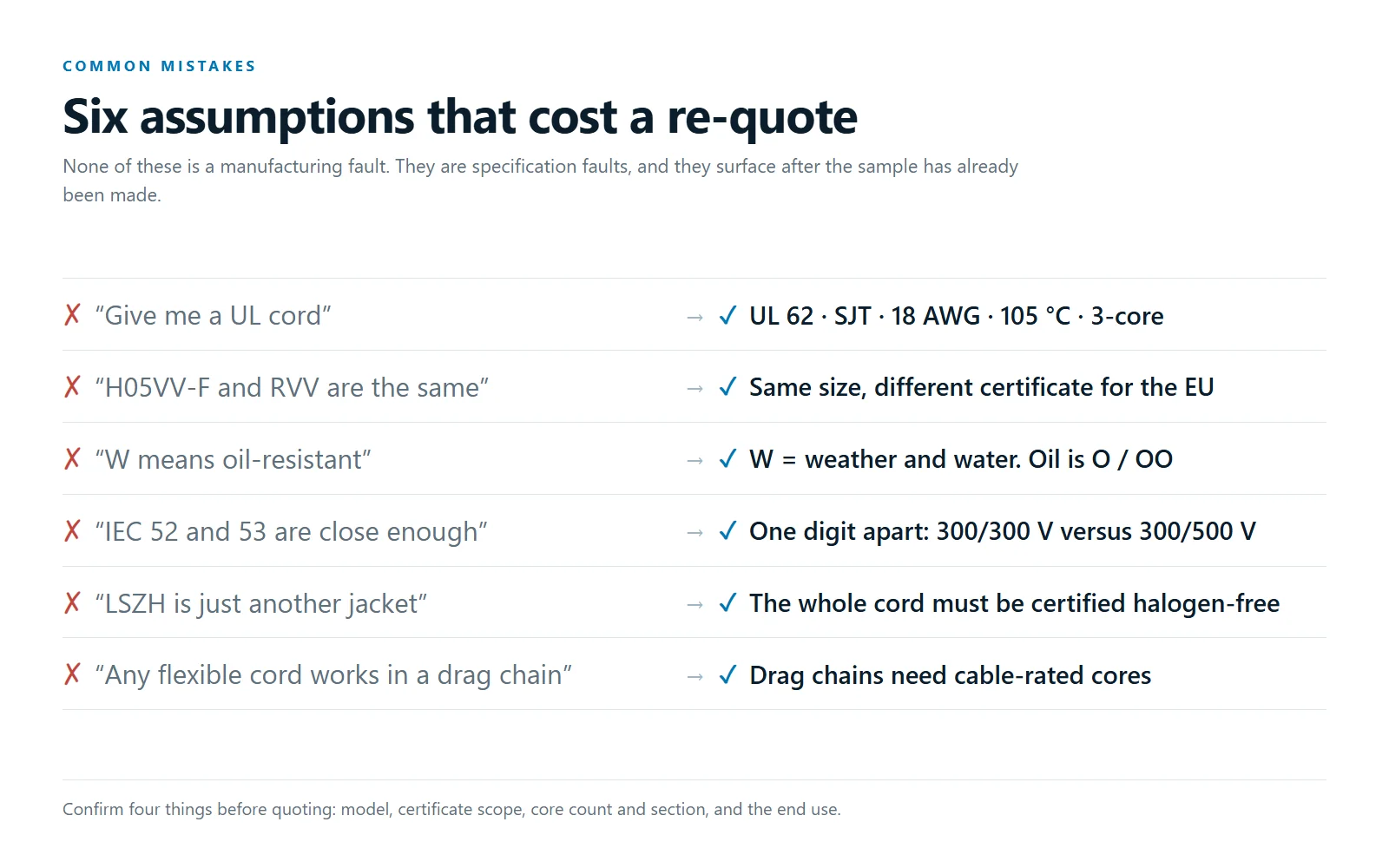
- Treating an approval as a model: VDE, UL and PSE are approvals; H05VV-F and SJT are models
- Assuming H05VV-F and RVV can be swapped for export: close on paper, but VDE asks for a stricter colour code, jacket compound, tolerances and low-temperature performance
- Reading voltage only: long runs, dragging and rolling need the mechanical class, and voltage alone will undersize the cord
- Mixing up IEC 52 and IEC 53: one digit apart, one voltage class apart
- Assuming W means oil-resistant: in UL, W is weather and water; oil is O / OO
- Using an ordinary flexible cord in a drag chain: high flex is not drag-chain rating, which needs a cable built for it
Four parameters to confirm before quoting
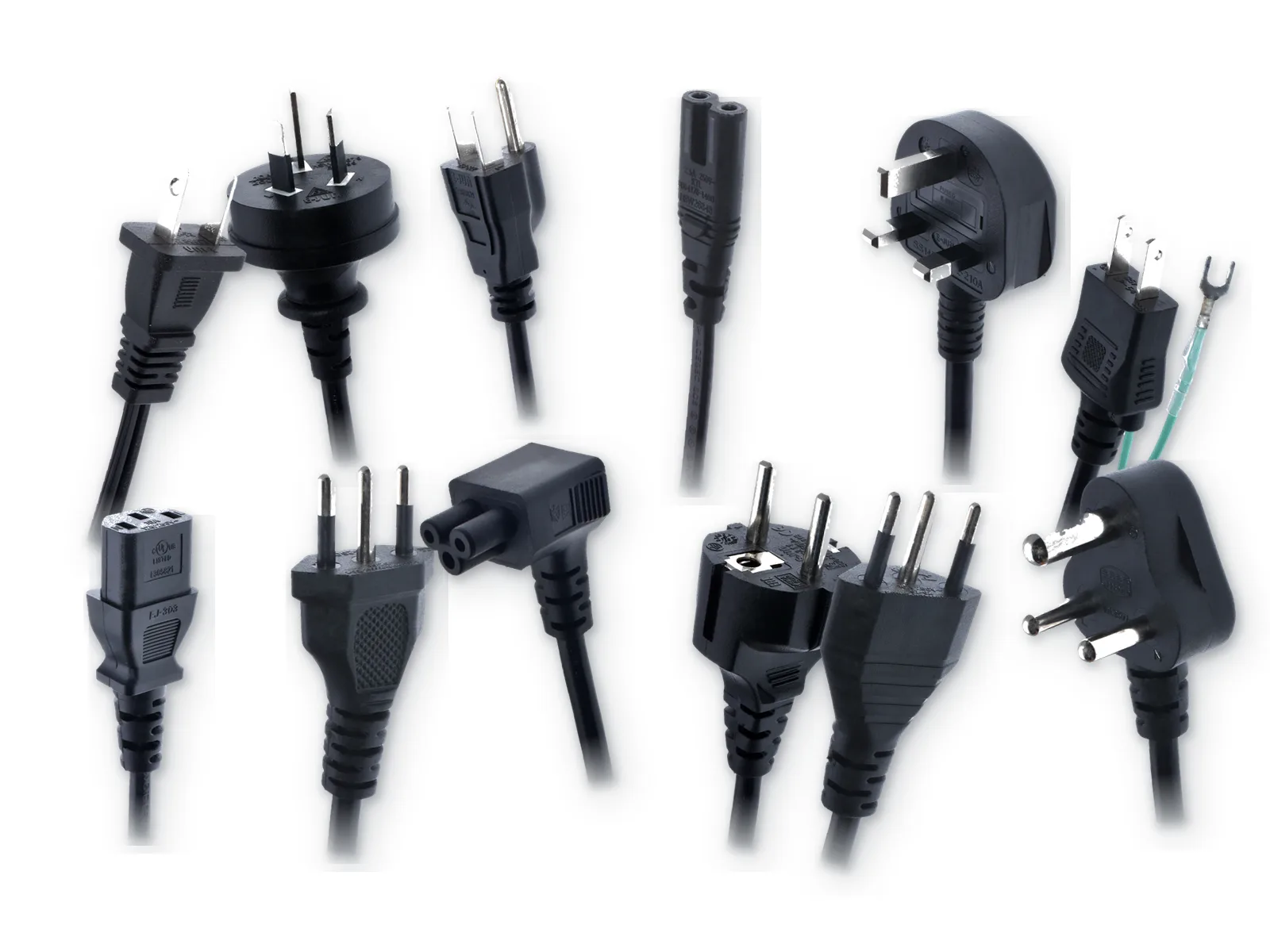
- Destination market and the certificates required (cable + plug + cord set)
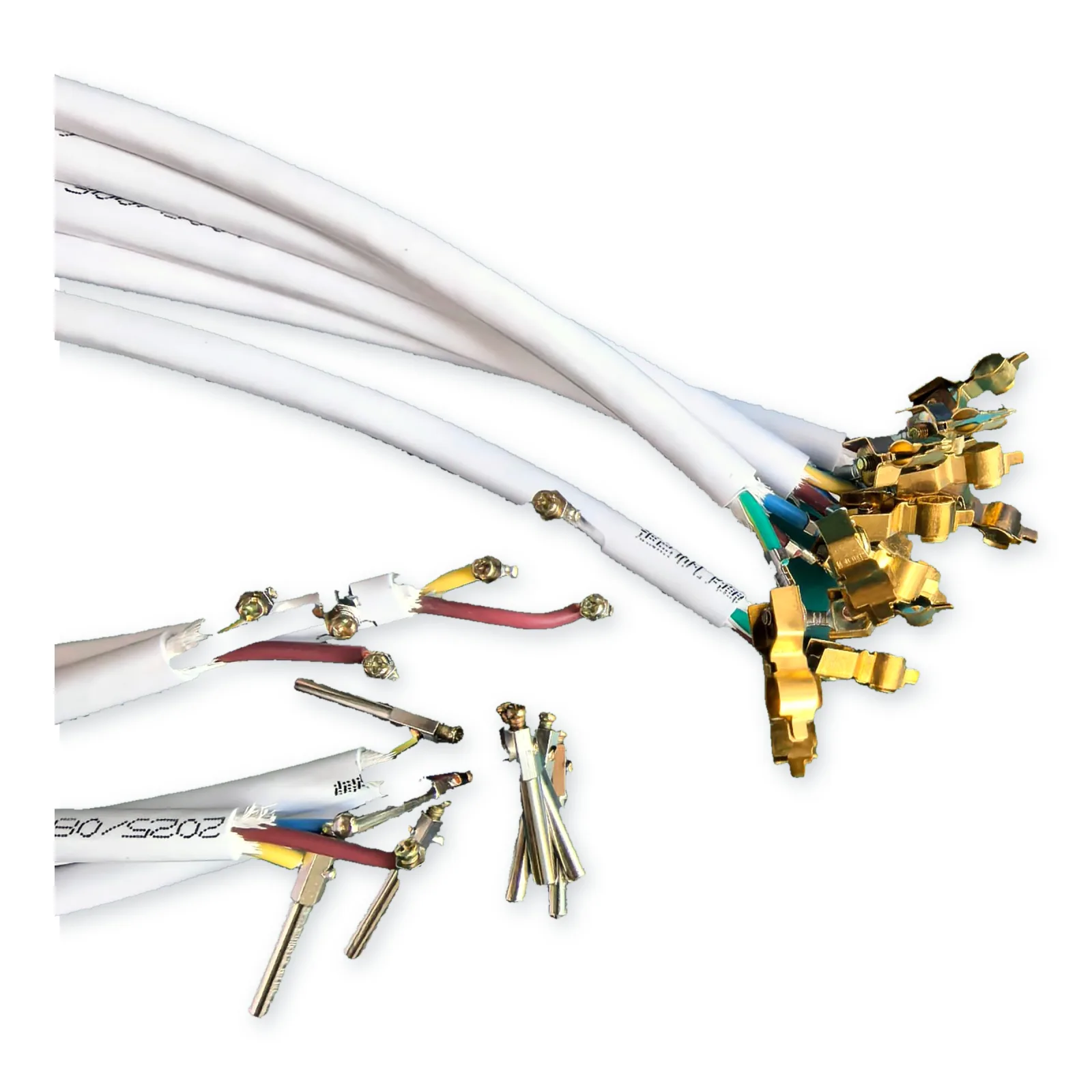
- Core count and cross-section, matched to the plug current rating — 0.75 mm² suits short runs up to 10 A only
- Environment: temperature, oil, weather, and whether LSZH or screening is needed
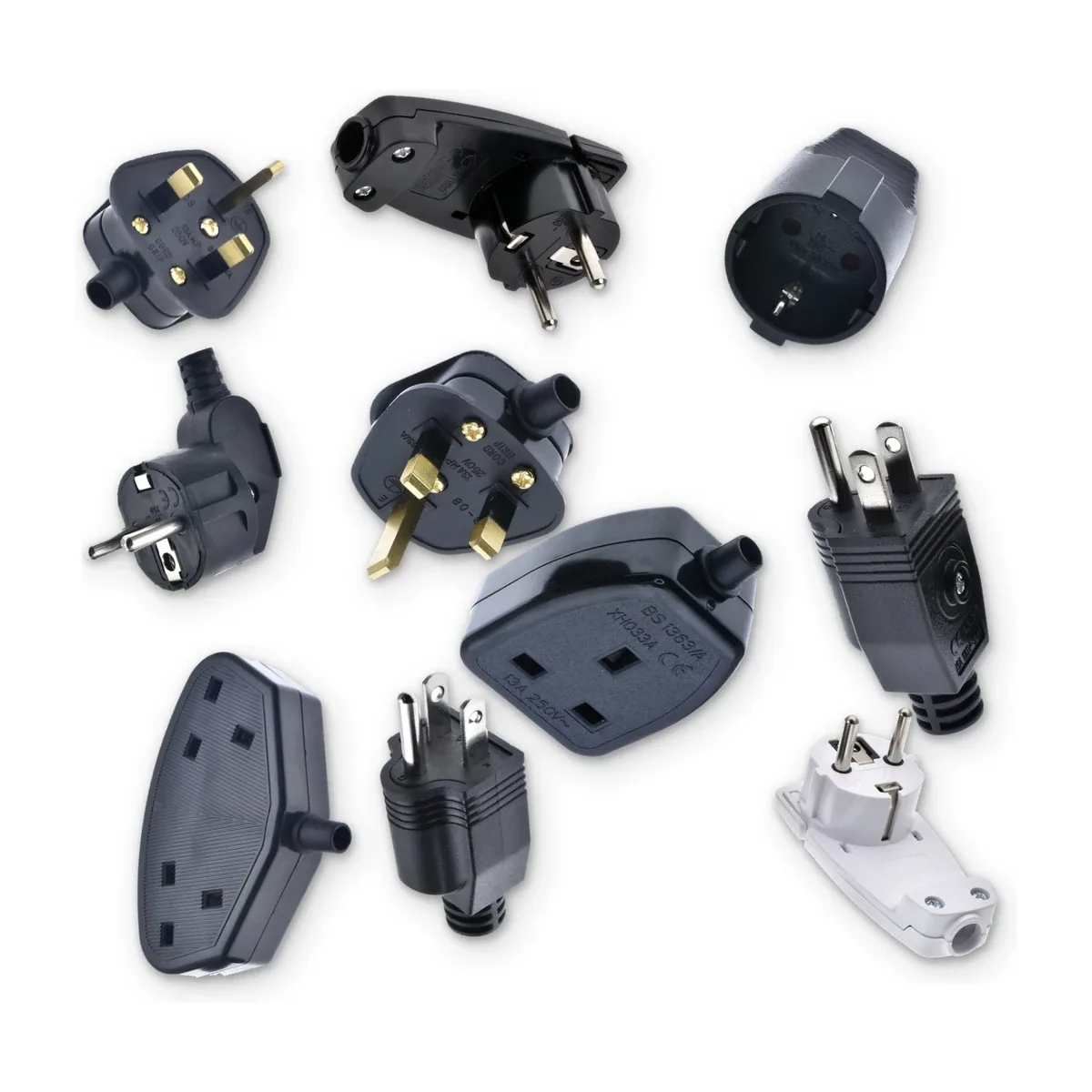
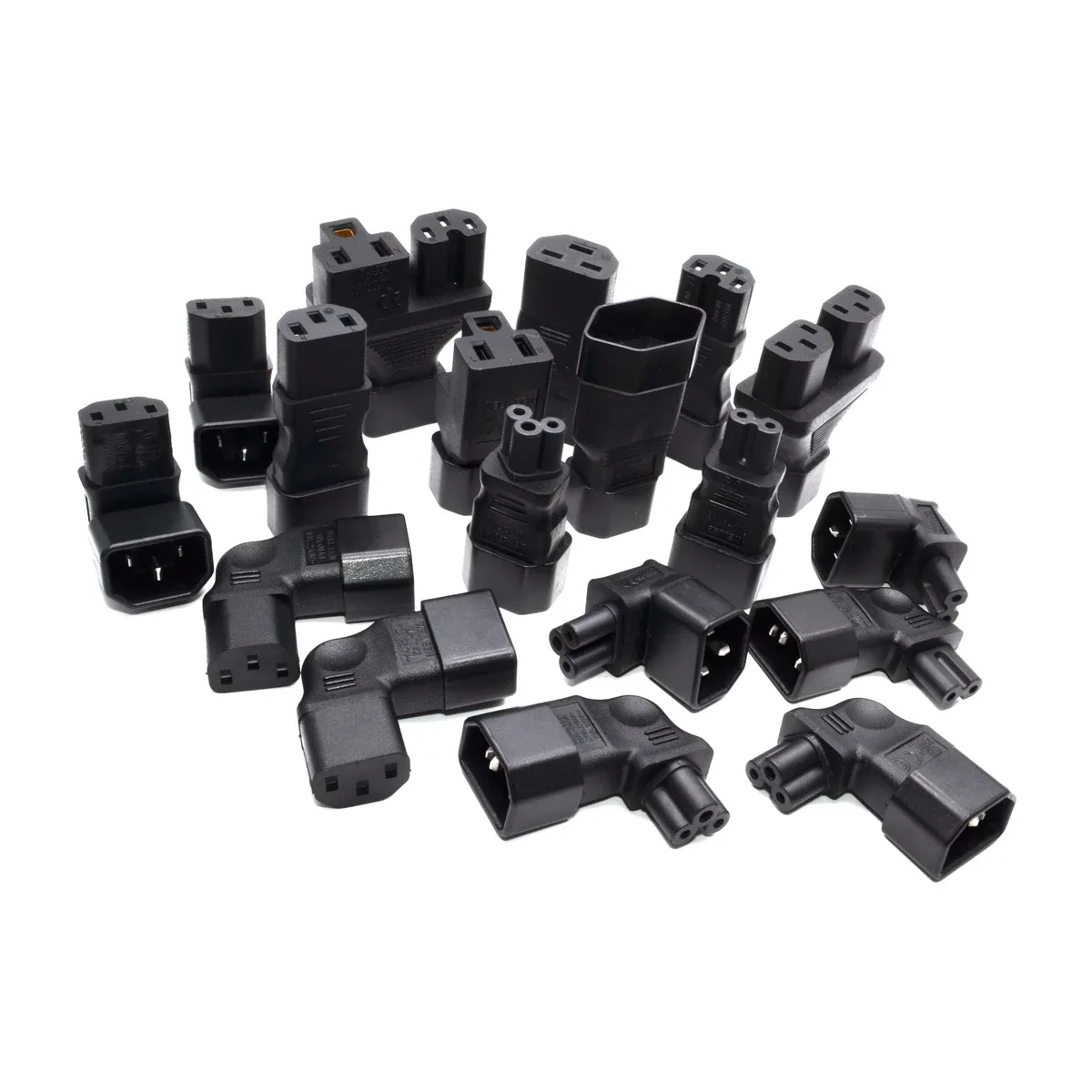
- Length and termination: plug and connector type, colour, jacket print
Standards move, so check the version
IEC 60227 / 60245 are being replaced by the EN 50525 series. Check the current edition and the certificate validity before ordering, so the standard cited on the certificate matches the order.